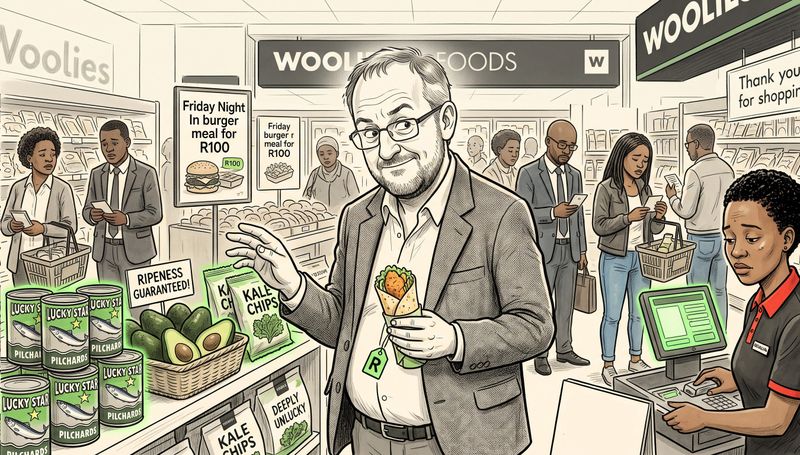
A recent financial update from Woolworths Foods has sent shockwaves through the Johannesburg Stock Exchange, exposing the precarious financial state of the South African middle class. According to Daily Maverick, the retailer’s group turnover and concession sales grew by a marginal 0.2 percent and 0.1 percent respectively. However, the most telling metric came from the food business, where turnover and concession sales rose by only 1.9 percent and 0.1 percent. This modest performance challenged the prevailing investment thesis that the middle class retains sufficient disposable income for premium grocery spending.
The market reaction was immediate and severe. Consumer shares across various sectors, including clothing and retail, fell sharply following the release. Daily Maverick noted that the event was "pretty incredible" given how mundane news typically moves markets. The decline served as a stark reminder that economic gravity still applies, contrasting with the decoupled era where markets often ignore underlying economic realities. The drop in clothing stocks particularly highlighted the vulnerability of retailers who compete on value rather than just premium quality.
The data reflects a broader trend of financial strain driven by high fuel prices and inflation. Viv Govender, a market commentator at Rand Swiss, explained to Daily Maverick that consumers are no longer shopping at Woolworths but are instead changing the food they buy for their children. This shift indicates that households are feeling the pinch deeply, moving away from premium options to more affordable alternatives. The retailer’s strategy of using everyday goods as loss leaders to attract customers has not been enough to offset the decline in high-margin premium sales.
Woolworths has attempted to compete in the low-cost segment with campaigns like "Friday Night In," which offered family meals for around R100. The retailer also stocked budget items like Lucky Star pilchards. Despite these efforts, Daily Maverick argues that premiumisation remains the core business model. The retailer’s in-store inflation has historically been higher than competitors like Shoprite and Spar. When times are tough, consumers can easily switch to other stores for basic needs, leaving Woolworths exposed. The market’s response underscores the importance of understanding the real impact of economic pressures on consumer behavior.