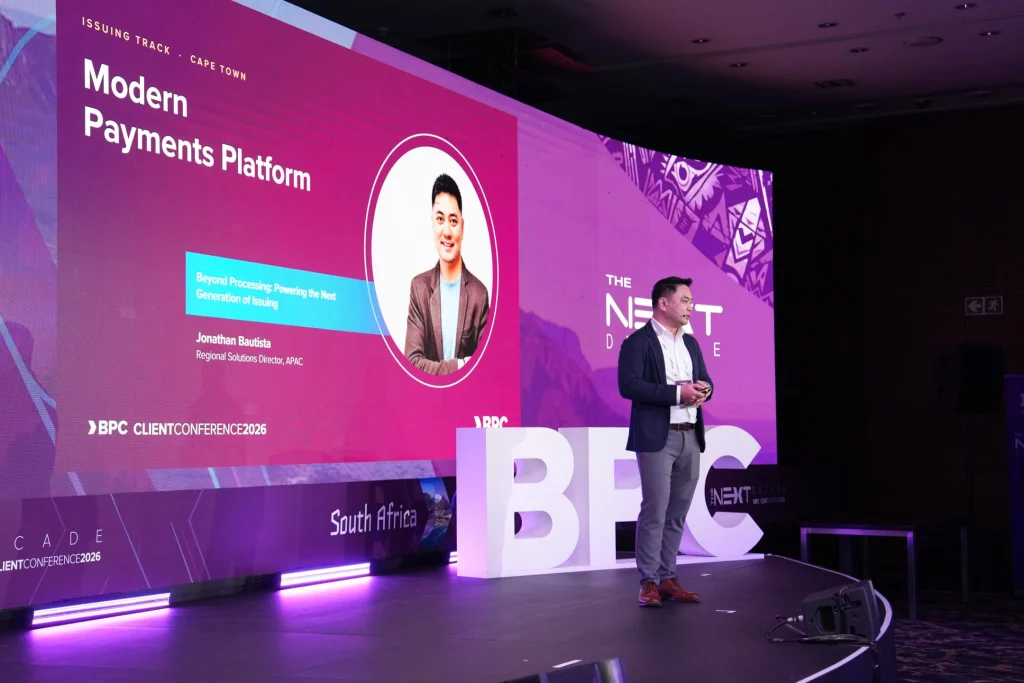
African financial institutions could boost innovation by leveraging current payment infrastructure instead of funding expensive replacements, TechCabal reported. This view dominated discussions at the BPC Client Conference 2026 in Cape Town, where industry experts explored ways to enhance existing technology to satisfy customer expectations for rapid digital banking.
Jonathan Bautista, who leads BPC’s Asia-Pacific solutions, argued that upgrading systems does not require discarding entire platforms. Speaking to TechCabal during the event, he explained that optimising current tools allows lenders to roll out new products quickly and enter new markets without the disruption of full replacements. He stressed that business goals, not just technical upgrades, should guide these modernisation efforts.
TechCabal highlighted that African lenders are already allocating significant budgets to digital tools. Eight major Nigerian banks generated 514.82 billion naira from electronic transfers in the first three quarters of 2025, while six institutions spent 268.7 billion naira on IT upgrades in 2024. Additionally, several South African lenders, including FNB and Capitec, are expanding into mobile connectivity services.
Bautista detailed how issuing platforms assess spending limits and fraud risks behind simple customer approvals. These features enable banks to create tailored corporate and procurement cards. He noted that lenders must launch services swiftly and apply specific controls for different customer groups to integrate smoothly with digital channels.
As artificial intelligence becomes central to fraud detection, Nasdaq Verafin’s 2026 report found that cyber-enabled scams cost 14.3 billion dollars in 2025. A related survey indicated that 90% of financial crime specialists observed a rise in AI-driven threats over the prior two years. Bautista added that while platforms may not stop deepfakes entirely, they can analyse transaction patterns to verify if activity matches normal customer behaviour.
Other AI tools for transaction routing and product configuration are still under development, according to Bautista. TechCabal concluded that the primary opportunity for African banks lies in identifying which capabilities their current systems already support and linking them to customer-facing services.