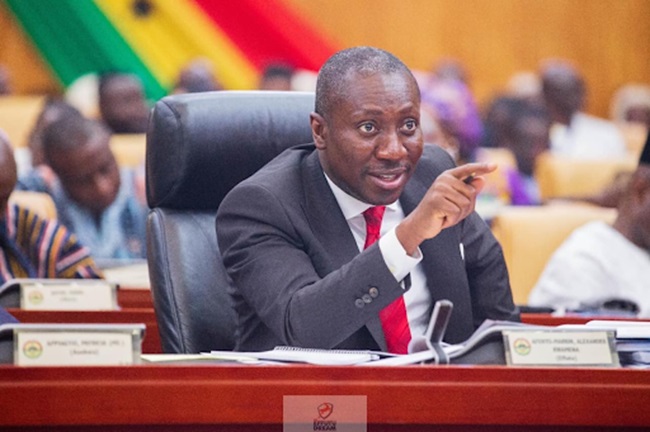
Ghana’s opposition has formally challenged the government’s latest economic strategy, questioning the financing mechanisms and the tangible benefits promised by Finance Minister Dr Cassiel Ato Forson. According to MyJoyOnline, Minority leader Alexander Afenyo-Markin and his colleagues assembled in Parliament to scrutinize the budget statement before it could be fully presented. The opposition demanded proof of the plan's viability, asking specifically who would fund the initiative and whether it represented a genuine shift in policy or merely a rebranding of existing programs.
The budget statement outlines a ten billion dollar investment spread over four years, aiming to drive industrialization, agricultural transformation, and technological advancement. The Finance Minister presented the plan as a pathway to reduce unemployment and stimulate growth. However, the opposition immediately questioned the legitimacy of the proposal. They argued that the government had failed to provide sufficient detail on how the funds would be raised or how the projects would be executed outside of official promises.
A significant portion of the parliamentary debate focused on the timing of the presentation. MyJoyOnline reported that Afenyo-Markin raised concerns about the decision to present the budget at six o'clock in the evening. He argued that this timing would prevent citizens from following the proceedings effectively. The opposition highlighted the irony of debating a so-called twenty-four-hour economy while scheduling critical financial discussions after normal working hours.
Former Finance Minister Mohammed Amin Adam joined the opposition in questioning the novelty of the new economic framework. He suggested that the plan was essentially the previous twenty-four-hour economy initiative repackaged with new terminology. The opposition described the government’s achievements as impressive on paper but lacking in real-world impact for ordinary citizens. They pointed out that macroeconomic indicators such as GDP growth do not always translate into improved living standards for the general population.
The Minority also questioned the absence of the Women’s Bank from the budget presentation. Afenyo-Markin asked for an explanation regarding the status of this previously publicized initiative, noting that its omission from the financial statement was notable. The opposition maintained that without concrete details on funding and implementation, the new economic plan remains an abstract concept rather than an actionable strategy. They emphasized that citizens are waiting for measurable improvements in their daily lives rather than further political announcements.