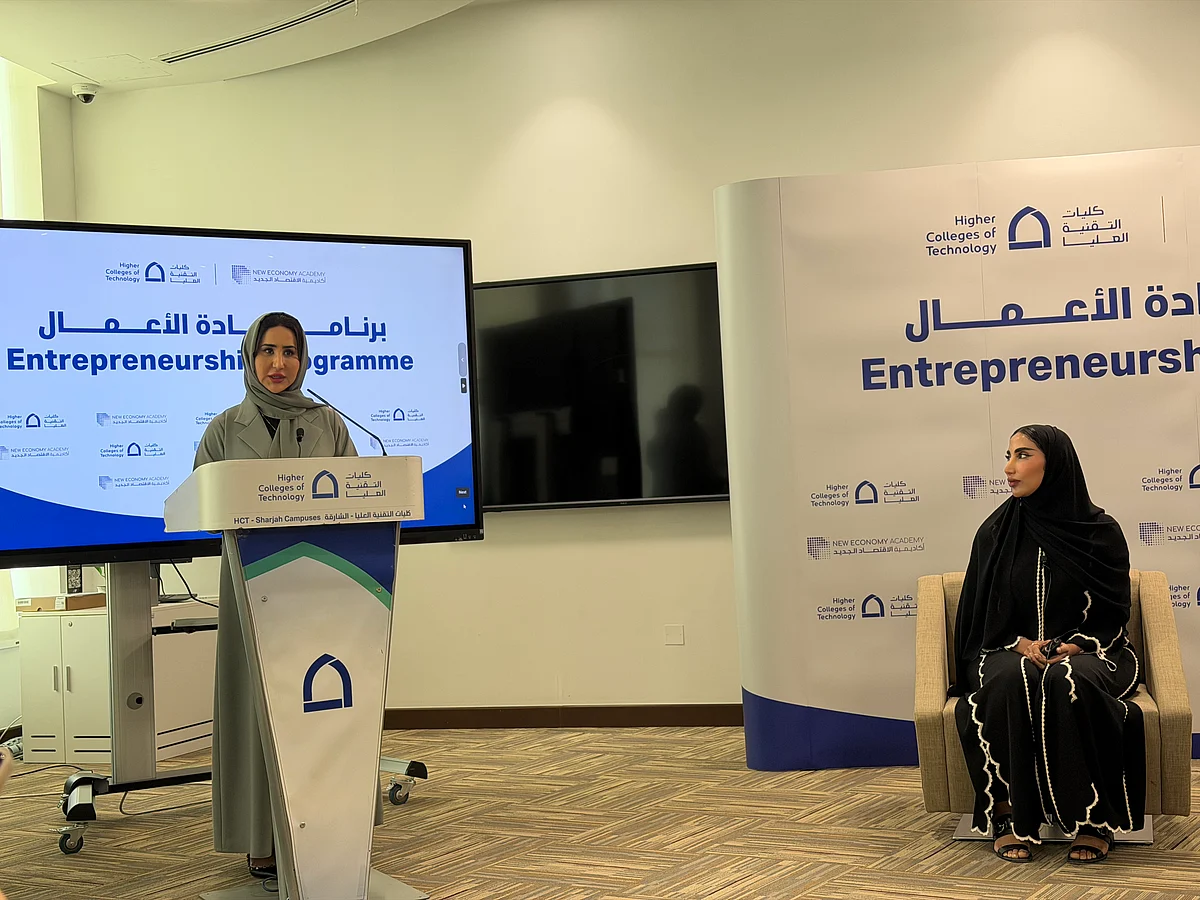
The Higher Colleges of Technology (HCT) has joined forces with the New Economy Academy to help learners convert their commercial concepts into viable enterprises. Khaleej Times reported that this collaboration, unveiled in Sharjah on Friday, seeks to prepare 2,000 students with the operational skills needed to run companies in the UAE. The curriculum is designed to fit within the students' existing academic schedules, allowing them to build businesses while still studying.
Laila Faridoon, the chief executive of the New Economy Academy, described the project as a key element of a nationwide drive initiated by Sheikh Mohammed bin Rashid Al Maktoum. The broader state effort aims to educate 10,000 Emiratis within a five-year window. HCT is responsible for training 400 students each year to meet its 2,000-person quota. Faridoon also noted that the wider initiative hopes to draw 10,000 foreign nationals to set up and expand their commercial ventures in the region.
The educational content addresses the immediate hurdles faced by new founders, such as navigating regulatory frameworks, understanding tax obligations, and identifying government support bodies. Participants will study how to register companies and utilize local facilities. The syllabus also incorporates artificial intelligence tools for product development and management. Furthermore, students must learn to analyze market data, spot competitors, and evaluate their own capacity to succeed in specific industries.
Ayesha Markhan, who leads employability and knowledge economy at HCT, stated that the deal expands career pathways beyond traditional permanent employment. She highlighted that the college’s existing incubation centers already aid student founders, but this new training ensures ventures are based on genuine market demand rather than repetitive ideas. Students will create financial and marketing plans, culminating in pitches to an expert panel. Faridoon added that strong proposals will receive further support from relevant organizations. Markhan confirmed that the first phase of the initial group is ending, with both institutions exploring deeper cooperation.